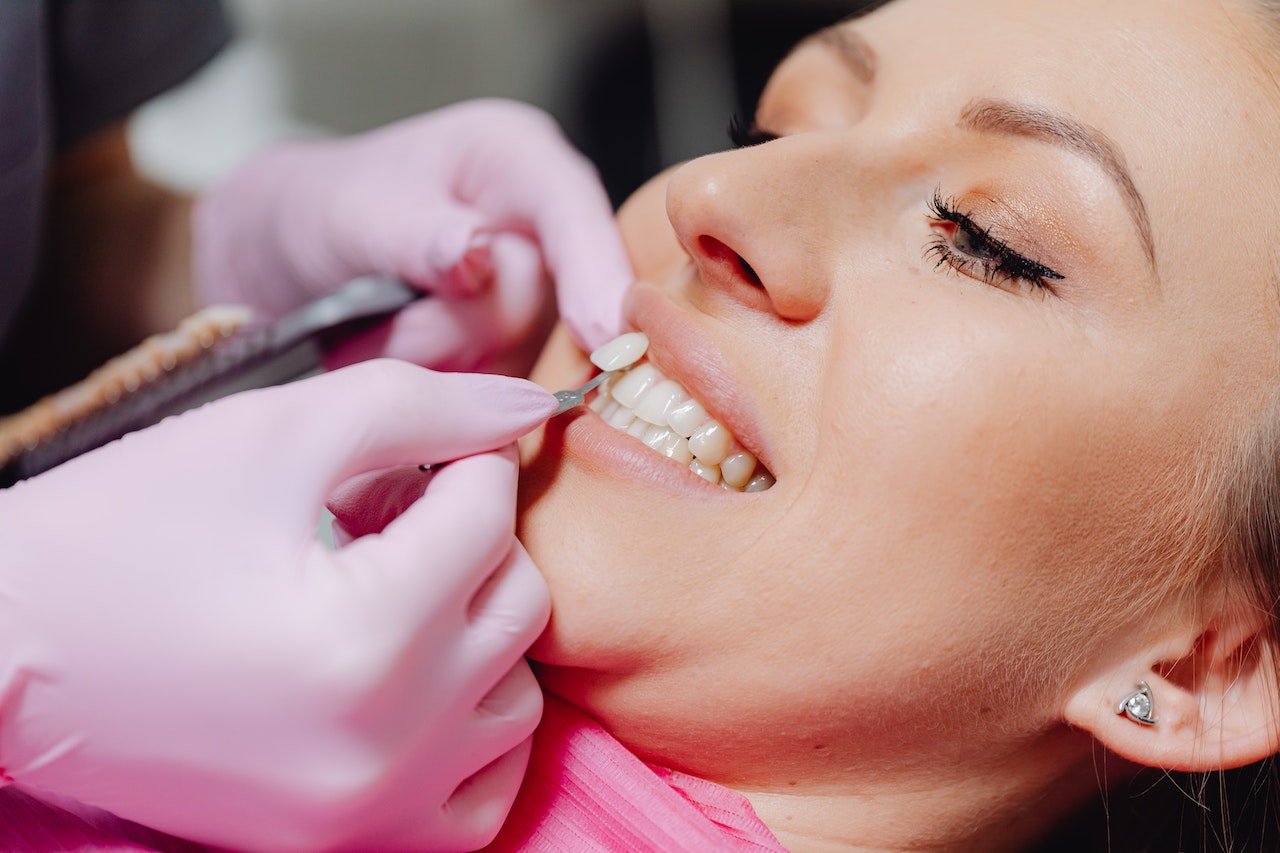
What Are Crowns, Implants and Veneers – Dental Surgery Explained by a Private Dentistry in Selby
Crowns, veneers and dental implants can all change the appearance of a smile, but they are designed to solve very different dental problems.
A crown covers and protects an existing tooth. A veneer is a thin facing placed over the front of a tooth. A dental implant replaces the root of a missing tooth and supports a separate crown, bridge or denture.
Choosing between them is therefore not simply a matter of deciding which one looks best. The condition of the tooth, the health of your gums, the amount of natural tooth structure remaining and what you would like treatment to achieve will all influence the recommendation.
Crowns, Veneers and Implants at a Glance
The main difference between these treatments is what they are designed to treat:
- A crown covers an existing tooth that has been weakened, extensively filled, broken or significantly damaged.
- A veneer covers the front surface of an existing tooth, usually to improve its colour, shape or appearance.
- A dental implant is placed into the jaw to support a replacement tooth when a natural tooth is already missing or cannot be retained.
None of these treatments is automatically the right choice for every chipped, discoloured or missing tooth. A dental assessment is needed to establish which options are clinically appropriate.
What Is a Dental Crown?
A dental crown is a restoration that covers most or all of the visible part of an existing tooth. It is sometimes described as a cap because it fits over the prepared tooth and restores its shape.
A crown may be recommended when a tooth:
- Has been badly damaged by decay
- Contains a very large filling
- Has cracked or fractured
- Has become significantly worn
- Has undergone root canal treatment
- Needs its shape or appearance restored
- Is being used to support a dental bridge
The purpose of a crown is often restorative rather than purely cosmetic. Although it may improve the tooth’s appearance, its main role may be to protect weakened tooth structure and restore function.
What Happens When a Crown Is Fitted?
The precise process depends on the tooth, the crown material and whether any additional treatment is needed first.
Treatment commonly involves:
- Examining the tooth and checking that a crown is appropriate.
- Using local anaesthetic where needed.
- Removing decay, damaged material and some natural tooth structure.
- Reshaping the tooth so the crown can fit over it.
- Taking an impression or digital scan.
- Providing a temporary crown where necessary.
- Fitting and adjusting the permanent crown at a later appointment.
The prepared tooth needs enough healthy structure to support the restoration. If too little remains, additional treatment may be required or another option may be more appropriate.
What Are Crowns Made From?
Crowns can be made from several materials, including ceramic, metal or a combination of materials.
The choice can depend on:
- Whether the tooth is at the front or back of the mouth
- The amount of biting pressure it receives
- The appearance you would like to achieve
- The amount of natural tooth remaining
- Your bite and any grinding habits
- Whether treatment is NHS or private
- The available budget
Your dentist should explain the suitable options, including how they differ in appearance, preparation, maintenance and cost.
What Are the Limitations of a Crown?
Fitting a crown usually involves removing some natural tooth structure. This makes it a more invasive treatment than a small filling or certain forms of bonding.
A crown may not be the most appropriate choice for a healthy tooth that only needs a minor cosmetic alteration. Less invasive treatment should be considered where it can provide a suitable and predictable result.
Crowns can also experience problems over time. They may chip, loosen or develop decay around their edges. The tooth underneath can still require root canal treatment or further restorative care.
A crown is not guaranteed to last for life. Its longevity will depend on the condition of the underlying tooth, the material, your bite, oral hygiene and how well it is maintained.
What Is a Dental Veneer?
A veneer is a thin layer of tooth-coloured material attached to the front surface of a tooth. Veneers are generally used to change appearance rather than restore a badly weakened tooth.
They may be considered for:
- A discoloured tooth that is unlikely to respond sufficiently to whitening
- A small chip or worn edge
- An uneven or unusually shaped tooth
- A minor gap between suitable teeth
- Improving the appearance of selected front teeth
Veneers are commonly made from porcelain or tooth-coloured composite material. The process and amount of preparation required can differ between the two.
You can learn more about both veneers and crowns on the practice’s veneers, crowns and bridges page.
Can Veneers Straighten Crooked Teeth?
Veneers do not physically move teeth. They may sometimes disguise a very minor difference in shape or position, but they are not a substitute for orthodontic treatment when teeth are significantly crowded, rotated or affecting the bite.
Trying to create the appearance of straighter teeth with veneers may require healthy tooth structure to be removed. Clear aligners or another orthodontic option may preserve more natural tooth tissue where the main concern is tooth position.
Your dentist should compare the appropriate options rather than automatically recommending veneers for crooked teeth.
What Happens When Veneers Are Fitted?
The process depends on whether porcelain or composite veneers are being considered.
For a porcelain veneer, treatment may involve:
- Assessing the tooth, gums and bite.
- Discussing the expected shape and colour.
- Removing a small amount of enamel where necessary.
- Taking an impression or digital scan.
- Providing a temporary restoration if required.
- Bonding the completed veneer to the tooth.
- Checking the appearance and bite.
Composite veneers may be built directly onto the tooth using tooth-coloured resin. This can sometimes require less preparation, although suitability and longevity will vary.
Are Veneers Reversible?
Some veneers require enamel to be removed so they can fit correctly. Because enamel does not grow back, treatment is not normally considered reversible once significant preparation has taken place.
The tooth may continue to need a veneer or another restoration if the original veneer later chips, loosens or requires replacement.
Descriptions such as “minimal preparation” or “no preparation” do not guarantee that a veneer is appropriate or completely reversible. The amount of tooth alteration should be discussed before treatment begins.
What Are the Limitations of Veneers?
Veneers only cover the front surface of a tooth. They may not provide enough protection for a tooth with extensive decay, a large filling or a significant fracture.
They may also be less suitable for patients who:
- Have active tooth decay or gum disease
- Grind or clench their teeth heavily
- Have insufficient healthy enamel for predictable bonding
- Have a bite that places excessive pressure on the veneer
- Need substantial correction of tooth position
Veneers can stain around their edges, chip or become loose. They may eventually require repair or replacement and should not be presented as permanent treatment.
What Is a Dental Implant?
A dental implant is an artificial replacement for the root of a missing tooth. It is normally made from titanium and is surgically placed into the jawbone.
After healing, the implant can support:
- A crown replacing one missing tooth
- A bridge replacing several missing teeth
- Certain types of removable denture
The implant itself is the component positioned beneath the gum. The visible replacement tooth is a separate crown or prosthesis fitted onto the implant after the appropriate healing and restorative stages.
When Might a Dental Implant Be Considered?
An implant may be considered when one or more teeth are already missing or when a tooth cannot be restored predictably.
It may offer an alternative to:
- A removable partial denture
- A conventional dental bridge
- Leaving the space untreated
A natural tooth should not normally be removed solely because an implant appears more modern or cosmetic. Where a tooth can be restored predictably, retaining it may still be preferable.
Your dentist should explain whether the tooth can be treated, what the prognosis may be and which replacement options would be available if extraction becomes necessary.
What Does Dental Implant Treatment Involve?
Implant treatment usually takes place over several stages rather than being completed during one appointment.
The process may include:
- A consultation and oral-health assessment.
- Scans or X-rays where clinically necessary.
- Assessment of the available bone and gum health.
- Removal of a failing tooth if it is still present.
- Bone grafting where insufficient bone is available.
- Surgical placement of the implant.
- A healing period to allow the implant to integrate with the bone.
- Fitting the final crown, bridge or denture.
Not every patient needs bone grafting, and treatment times vary. Some people can receive temporary teeth during healing, while others may need to wait before the final restoration is fitted.
Further details about assessment and treatment are available on the practice’s dental implants page.
Who May Not Be Suitable for Dental Implants?
Suitability depends on more than simply having a missing tooth. Your dentist will need to consider:
- The amount and quality of available jawbone
- The health of your gums
- Your oral-hygiene routine
- Smoking
- Medical conditions and medication
- Grinding or clenching
- The position of nerves, sinuses and neighbouring teeth
- Your ability to attend maintenance appointments
Active gum disease and uncontrolled tooth decay normally need to be treated before implant placement. Smoking can also increase the risk of complications and may affect healing.
Being unsuitable immediately does not always mean implant treatment will never be possible. Additional care may sometimes improve suitability, but this cannot be assumed before a full assessment.
Do Implants Feel Like Natural Teeth?
Implant-supported teeth are designed to feel stable during normal speaking and eating, but they are not identical to natural teeth.
An implant does not have the same ligament or nerve supply as a natural tooth. This means it may respond differently to pressure and cannot develop ordinary tooth decay.
However, plaque can still cause inflammation in the gum and bone surrounding an implant. The crown, bridge or denture attached to it can also chip, loosen or wear.
Implants require careful brushing, interdental cleaning and regular professional maintenance. They should not be described as maintenance-free or guaranteed for life.
Crown, Veneer or Implant: Which Treats Which Problem?
A Tooth That Is Badly Broken but Still Present
A crown may be suitable when enough healthy tooth and root remain to support it. A filling, inlay or onlay may be considered where less extensive coverage is required.
A Healthy Tooth With a Cosmetic Concern
A veneer may sometimes be suitable for discolouration, shape differences or minor surface damage. Whitening, orthodontics or less invasive restorative treatment may also need to be considered.
A Tooth That Is Already Missing
A dental implant can support a replacement tooth, but a bridge or denture may also be suitable. A veneer cannot replace a missing tooth, and an ordinary crown cannot be fitted without a tooth or implant underneath it.
A Tooth That Cannot Be Saved
If extraction is necessary, the replacement options may include an implant, bridge or denture. The choice will depend on the neighbouring teeth, bone, gums, medical circumstances, timescale and cost.
Are These Treatments Available on the NHS?
Crowns may be available through the NHS when they are clinically necessary to restore or protect a tooth. The material and appearance offered through the NHS may differ from privately available options.
Veneers and dental implants are usually provided privately, although NHS treatment may be available in limited clinical circumstances.
Your dentist should explain whether there is an NHS option, a private option or both. You should not feel pressured to select private treatment when suitable clinically necessary NHS care is available.
How Much Do Crowns, Veneers and Implants Cost?
The cost depends on the treatment, material, complexity and number of teeth involved.
Park Street Dental Practice currently lists:
- Crowns and veneers from £595
- Dental implants from £1,950
These are starting prices rather than guaranteed final costs. Implant treatment may involve additional planning, scans, grafting, temporary teeth or restorative components depending on the case.
A written treatment plan should explain what is included and identify any foreseeable additional charges. Current starting prices can be checked on the practice’s dental fees page.
Questions to Ask Before Choosing Treatment
Before agreeing to a crown, veneer or implant, consider asking:
- What problem is this treatment intended to solve?
- Can the natural tooth be preserved?
- Is there a less invasive alternative?
- How much tooth tissue will be removed?
- What are the main risks and limitations?
- How long might treatment take?
- What maintenance will be required?
- How long is the restoration expected to last?
- What could happen if it chips, loosens or fails?
- What is included in the quoted cost?
- Are NHS and private options available?
The right treatment should be based on your oral health and informed preferences, not solely on photographs, trends or promises of a perfect smile.
Arrange a Consultation in Selby
Crowns, veneers and dental implants serve different purposes. Crowns protect existing teeth, veneers alter the appearance of suitable front teeth, and implants support replacements for teeth that are already missing.
Park Street Dental Practice can assess your teeth and gums, discuss what you would like to achieve and explain the appropriate options, alternatives, costs and maintenance requirements.
To arrange a consultation at the practice in Selby, visit the contact page.