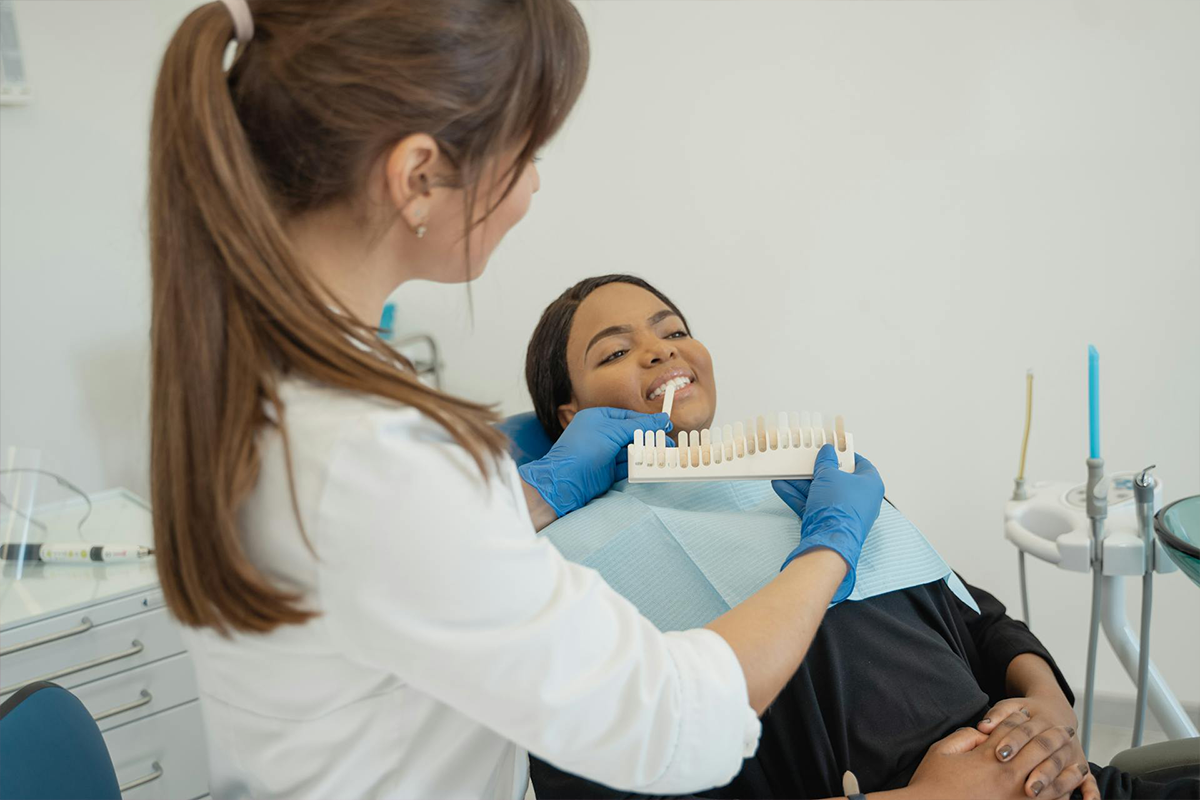
What is cosmetic dentistry?
Cosmetic dentistry focuses on improving the appearance of the teeth and smile. For some patients, this may mean whitening stained teeth. For others, it may involve improving the shape, alignment, spacing or overall appearance of the smile.
Cosmetic dental treatment should always begin with a proper assessment of your teeth, gums and oral health. A brighter or more even smile can be a positive goal, but treatment needs to be planned safely and realistically around your individual mouth.
At Park Street Dental Practice, patients are supported by an experienced and educated team who can explain cosmetic options clearly. The practice is known for friendly care, strong patient feedback and helping patients make informed choices about their dental care.
What Is Cosmetic Dentistry?
Cosmetic dentistry is a term used for dental treatments that are designed to improve the appearance of the teeth, gums or smile. This can include treatments that change tooth colour, shape, size, spacing or alignment.
Some cosmetic treatments are purely focused on appearance, while others may also improve function or restore damaged teeth. For example, a crown may be used to protect a weakened tooth, but it can also improve how that tooth looks.
You can learn more about smile-focused treatment options on the cosmetic dentistry page.
What Treatments Are Included in Cosmetic Dentistry?
Cosmetic dentistry can involve a range of treatments. The right option depends on what you would like to change, the condition of your teeth and gums, and what is clinically suitable.
Teeth Whitening
Teeth whitening is used to lighten the natural colour of teeth. It can help reduce the appearance of staining caused by ageing, tea, coffee, red wine, smoking or other lifestyle factors.
Whitening only works on natural tooth tissue. It will not change the colour of crowns, veneers, bridges, dentures or fillings, so it should be planned carefully if you have visible dental work.
Composite Bonding
Composite bonding uses tooth-coloured resin to improve the shape or appearance of teeth. It may be used for small chips, uneven edges, minor gaps or areas where a tooth needs subtle reshaping.
Bonding can be a conservative option in suitable cases, but it is not as stain-resistant or long-lasting as some ceramic restorations. Your dentist can explain what maintenance may be needed.
Veneers
Veneers are thin coverings placed over the front surface of teeth to improve their appearance. They may be considered for teeth that are stained, worn, chipped, uneven or differently shaped.
Veneers are not suitable for everyone. Your dentist will need to check the health of the teeth and gums first, and explain whether veneers, bonding, whitening or another option would be more appropriate.
Invisalign and Teeth Straightening
If tooth alignment is the main concern, clear aligners such as Invisalign may be discussed. Invisalign uses a series of removable aligners to gradually move teeth into a planned position.
Clear aligners can be suitable for many mild to moderate alignment concerns, but they are not right for every case. A consultation is needed to assess the teeth, bite and gums before treatment can be recommended.
You can find out more on the Invisalign page.
Crowns and Bridges
Crowns and bridges can be used to restore damaged, weakened or missing teeth. They are often restorative treatments, but they can also improve the appearance of the smile when visible teeth need rebuilding or replacing.
The best option depends on the tooth, the bite, the surrounding teeth and the patient’s long-term oral health needs.
Dental Implants
Dental implants are used to replace missing teeth. While implants are not purely cosmetic, they can improve the appearance of the smile as well as support chewing and function in suitable cases.
Implant treatment requires careful assessment and planning, including checking the health of the gums, bone and surrounding teeth.
Is Cosmetic Dentistry Right for Everyone?
Cosmetic dentistry is not suitable for every patient straight away. Before starting treatment, your dentist should check that your teeth and gums are healthy enough for the option you are considering.
If there is untreated decay, gum disease, infection, severe sensitivity or other active dental problems, these may need to be treated first. Cosmetic treatment is usually most successful when it is built on a healthy foundation.
What Can Cosmetic Dentistry Help With?
Cosmetic dentistry may help with several common concerns, including stained teeth, small chips, uneven tooth edges, gaps, crowded teeth, worn teeth or missing teeth. It may also help patients who feel self-conscious about smiling in photos or social situations.
However, the best treatment is not always the most dramatic one. Sometimes subtle changes, such as whitening or minor bonding, can make a noticeable difference while keeping the smile natural.
Is Cosmetic Dentistry Available on the NHS?
Cosmetic dentistry is usually provided privately when the treatment is being carried out mainly to improve appearance. NHS dental care is focused on clinically necessary treatment to keep the mouth healthy.
Some treatments may have both health and appearance benefits, so it is always worth asking your dentist what is available on the NHS, what would be private, and what the difference is between the options.
Is Teeth Whitening Safe?
Teeth whitening can be safe when it is provided by a dentist or by another registered dental professional working to a dentist’s prescription. This matters because whitening products use chemicals that need to be used correctly to protect the teeth and gums.
The NHS advises that using a kit from a dentist, or having whitening carried out at a dental surgery, is the safest way to whiten teeth. In the UK, tooth whitening should only be provided by registered dental professionals.
You can learn more about whitening options on the teeth whitening page.
What Happens at a Cosmetic Dentistry Consultation?
A cosmetic dentistry consultation is used to understand what you would like to change and whether treatment is suitable. Your dentist may assess your teeth, gums, bite, existing dental work, oral hygiene and overall dental health.
You should also have the opportunity to ask questions about treatment time, costs, maintenance, risks, limitations and expected results. Good cosmetic dentistry should feel clear and considered, not rushed.
How Long Do Cosmetic Dental Treatments Last?
This depends on the treatment, your oral health and how well you care for your teeth afterwards. Whitening is not permanent and may need maintenance. Bonding may stain or chip over time. Veneers, crowns, bridges and implants need ongoing care and regular dental reviews.
Your dentist can explain the expected lifespan and maintenance needs of any treatment you are considering. Regular check-ups, good oral hygiene and avoiding habits such as nail-biting or chewing hard objects can help protect results.
How Park Street Dental Practice Can Help
Park Street Dental Practice can help patients explore cosmetic dentistry in a safe, informed and realistic way. The team will listen to your goals, assess your oral health and explain suitable options clearly before any treatment begins.
With an experienced team, strong five-star feedback and a friendly approach, the practice aims to make cosmetic dental care feel supportive, professional and tailored to each patient.
Ask About Cosmetic Dentistry
If you are thinking about improving your smile, a consultation is the best place to start. Park Street Dental Practice can help you understand what may be possible, what treatment may involve and which options are suitable for your teeth.
To ask about cosmetic dentistry or arrange an appointment, visit the contact page and get in touch with Park Street Dental Practice.